Source Used Honda Accord Sedan for Family Commute and Business Travel
Explore 30 listings of Used Honda Accord Sedan vehicles available for family commuting, business travel, and daily urban driving. Buyers can compare specifications, mileage, and pricing to find the right fit.
Key considerations
Products List


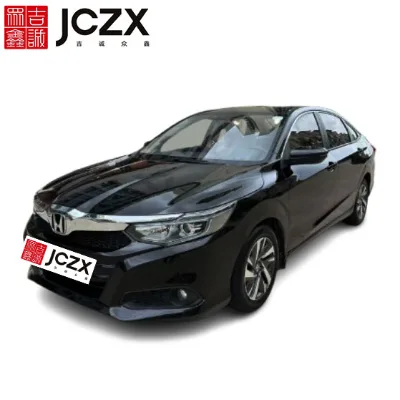
Honda Accord 2022 260turbo Phantom Night Premium Editio Used Car Sedan Vehicle Gas
$15542.00 - $17097.00
MOQ: 1 Pieces


Honda Accord New Used Medium Gasoline Auto Fuel Petrol Car 4 Door 5 Seats Sedan
$19600.00 - $23600.00
MOQ: 1 Pieces


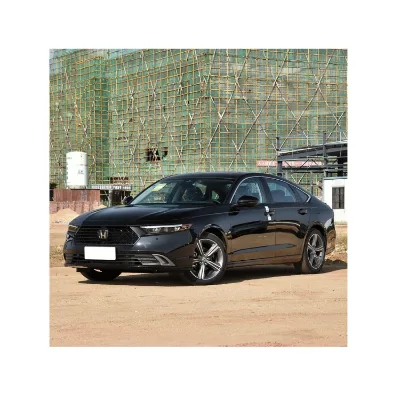


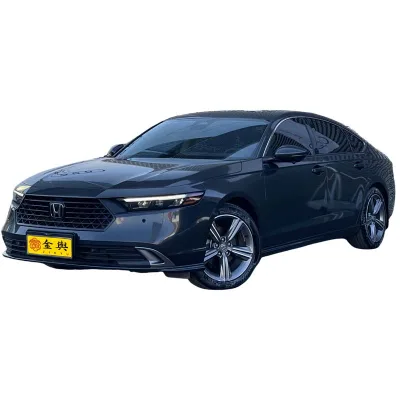
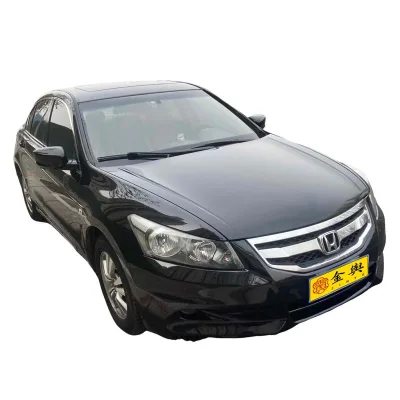
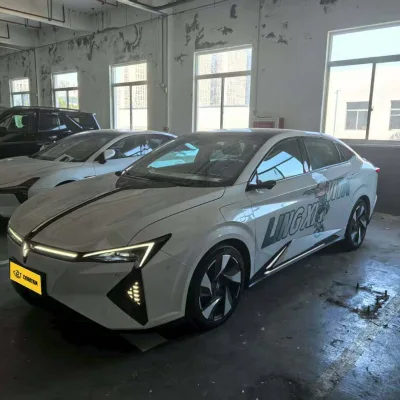

Classic Model Honda Accord Used Accord Petrol Cars Cheap Prices Sedan Gasoline Car
$22000.00 - $24000.00
MOQ: 1 Pieces

Stylish Honda Accord Used Car Durable MID Size Sedan Family Gasoline Automobile
$12000.00 - $16000.00
MOQ: 1 Pieces

Smooth Driving Honda Accord Used Car MID Size Sedan Family Gasoline Automobile
$12000.00 - $16000.00
MOQ: 1 Pieces

Durable Honda Accord Used Car Efficient MID Size Sedan Family Gasoline Vehicle
$12000.00 - $16000.00
MOQ: 1 Pieces

High Quality Honda Accord Sedan Used Car MID Size Family Gasoline Automobile
$12000.00 - $16000.00
MOQ: 1 Pieces

Efficient Honda Accord Used Car MID Size Sedan Family Popular Gasoline Automobile
$12000.00 - $16000.00
MOQ: 1 Pieces
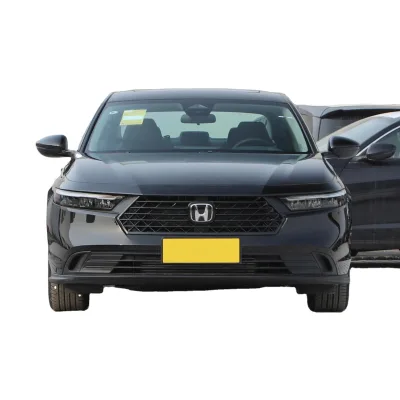
Hot Sale Classic Model honda Accord New New Accord Petrol Cars Cheap Prices Sedan
$16999.00 - $19999.00
MOQ: 2 pieces
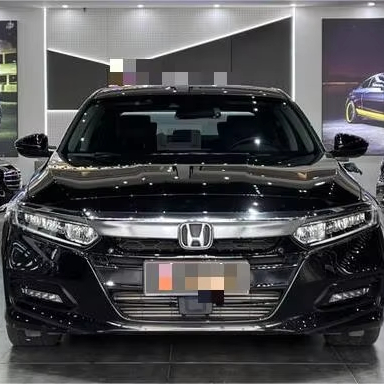


Comprehensive Sourcing Guide
Strategic Sourcing Guide for Used Honda Accord Sedans
Understanding the Product Profile and Market Variability
When sourcing used Honda Accord sedans, buyers must first recognize that the market presents a heterogeneous mix of vehicle conditions, specifications, and origins. The core keyword "Used Honda Accord Sedan" encompasses a wide spectrum of inventory, ranging from low-mileage family vehicles to high-utilization commercial units. Based on observed market data, the available inventory includes vehicles with mileage ranging from 30,000 to over 100,000 kilometers. This variance significantly impacts the valuation and remaining service life of the unit. Some listings indicate a service life expectancy of 3 to 6 years, while others suggest a more extended operational window depending on maintenance history.
The physical characteristics of these sedans also vary. The observed inventory includes models with displacements spanning from 1.0-1.6L up to 2.0-2.6L, with specific high-performance variants noted as having a 1.5T 192HP L4 engine. Color options are predominantly white or black, and the body structure is consistently a 4-door or 5-door sedan configuration. It is critical for procurement teams to distinguish between these sub-segments, as a 1.5T engine unit will have different fuel consumption profiles and maintenance requirements compared to a 2.0-2.6L displacement model. The "Level" of these vehicles is generally categorized as MID-Size Car, making them suitable for both personal family use and corporate fleet applications.
Technical Specifications and Configuration Analysis
A deep dive into the technical specifications reveals a complex array of features that must be verified during the sourcing process. The braking systems observed in the inventory include electromagnetic configurations, which may differ from traditional hydraulic systems found in older models. The gearbox is consistently automatic, paired with front-wheel drive (Front Driving) configurations. For buyers focusing on fuel efficiency, the gasoline fuel type is standard, with displacement options allowing for a choice between smaller 1.0-1.6L engines and larger 1.5T or 2.0-2.6L units.
Interior and convenience features are equally varied. The steering wheel material is noted as Cortex in some listings, while others may feature different finishes. Steering wheel adjustment is typically manual, allowing for up-down and front-back positioning. The seating configuration is predominantly 5-seater, though some units are described with unique reclining ratios for rear seats, such as "Stacked Upside Down," which requires careful verification of ergonomic suitability. Multimedia interfaces are modern, featuring USB and Type-C connectivity, with some units offering two USB ports. Safety and monitoring systems include Tire Pressure Monitoring Systems (TPMS) with RPA functionality and tire pressure display capabilities. The parking brake type is identified as EPB (Electronic Parking Brake), and the door opening mechanism is a standard vertical hinged door.
| Feature Category | Observed Specifications | Verification Requirement |
|---|---|---|
| Engine & Power | 1.5T 192HP L4, 1.0-1.6L, 2.0-2.6L | Verify actual horsepower and torque (e.g., 260 N·M) against VIN. |
| Dimensions | 4893-4990mm (L) x 1862mm (W) x 1449-1450mm (H) | Confirm exact mm dimensions for shipping container compatibility. |
| Transmission | Automatic | Confirm gear ratio and shift logic. |
| Braking | Electromagnetic | Inspect brake pad wear and system calibration. |
| Tire Monitoring | RPA, Tire Pressure Display | Test sensor functionality and display accuracy. |
| Key System | Remote Key | Verify key fob battery life and pairing status. |
Compliance, Certification, and Regulatory Standards
Procurement of used vehicles, particularly those originating from China, requires rigorous adherence to compliance standards. The inventory data references specific product standards, such as dimensional codes like 453517551450, 490618621449, and 4990x1862x1449. These figures likely represent specific model variants or regulatory compliance benchmarks for the region of origin. Buyers must verify that the vehicle's actual dimensions match these standards to ensure it meets import regulations in the destination country.
Furthermore, the "prod_standard" field suggests that vehicles are categorized under specific dimensional or structural norms. When sourcing from China, buyers should confirm that the vehicle meets the emission standards and safety regulations of the importing jurisdiction. While specific certification names are not provided in the source data, the presence of standardized dimensions implies a level of regulatory conformity. It is essential to request documentation proving that the vehicle's engine displacement and power output (e.g., 141 Motor Power or 192HP) align with local tax and registration categories. Failure to verify these standards can lead to customs delays or the inability to register the vehicle for road use.
Cost Drivers and Pricing Dynamics
The pricing for used Honda Accord sedans is influenced by a combination of mileage, condition, and specific configuration. The observed price range in the market spans from $5,000 to $46,800 USD. This wide disparity is primarily driven by the mileage variance, where units with 30,000-60,000 km command higher prices than those exceeding 100,000 km. Additionally, the engine type plays a significant role; the 1.5T 192HP variant may be priced differently than the 1.0-1.6L or 2.0-2.6L options due to performance expectations and fuel efficiency ratings.
Other cost drivers include the condition of the interior and exterior. Units described as "Unpacked" or "Unpackaged" may require additional investment in reconditioning or protective packaging for international shipment. The presence of advanced features like EPB, Cruise Control, and advanced multimedia interfaces can also increase the base price. Buyers should be aware that the Minimum Order Quantity (MOQ) is low, ranging from 1 to 2 units, which allows for flexible procurement strategies but may affect bulk negotiation leverage. The "Service Life" of 3-6 years is a critical factor in calculating the total cost of ownership; a vehicle with a shorter remaining service life will have a lower acquisition cost but potentially higher maintenance expenses.
Supplier Evaluation and Operational Logistics
Evaluating suppliers for used vehicles requires a focus on transparency regarding the vehicle's history and condition. The supply chain for these units often involves direct shipments from China, with packaging methods ranging from "Unpacked" to "by Flat Rack Container Shipment." This variation in packaging indicates different logistical approaches and cost structures. Buyers should verify the supplier's ability to provide detailed inspection reports that cover the "Road Conditions" the vehicle has experienced, as this impacts the suspension and chassis integrity.
When assessing suppliers, procurement teams should look for evidence of rigorous pre-shipment inspections. The "Front Row" handrails and "Front/Rear Handrails" specifications suggest attention to interior safety features, which should be confirmed physically. The supplier's ability to handle the specific "prod_packing" requirements is crucial; for instance, a flat rack container shipment is necessary for larger vehicles or those requiring specific protection during transit. Buyers must also evaluate the supplier's responsiveness regarding the "Key Type" and "Remote Key" functionality, ensuring that all electronic systems are operational upon delivery.
Quality Control and Inspection Protocols
Quality control for used Honda Accord sedans must be multi-faceted, addressing mechanical, cosmetic, and electronic systems. Given the observed mileage ranges, a comprehensive mechanical inspection is non-negotiable. This includes verifying the "Braking System" for electromagnetic anomalies and checking the "Gearbox" for smooth shifting. The "Tire Pressure Monitoring System" (RPA) should be tested to ensure the display functions correctly and that the sensors are calibrated.
Cosmetic inspections should focus on the "Color" consistency (White or Black) and the condition of the "Steering Wheel" material (Cortex or otherwise). The "Number of Doors" (4-Door or 5-Door) must be verified to match the order specifications. Additionally, the "Reclining Ratio of The Rear Seats" should be tested to ensure the mechanism operates smoothly and safely. For vehicles with a "Service Life" of 3-6 years, a detailed engine health check is required to confirm that the "Motor Power" and "Maximum Torque" meet the advertised specifications. Buyers should also inspect the "Body Structure" to ensure there is no evidence of structural damage that could compromise safety.
Long-Term Procurement and Fleet Management Considerations
For buyers planning long-term procurement, the "Usage" classification as a "Family Car" suggests these vehicles are well-suited for personal or small fleet applications. However, the "Road Conditions" attribute indicates that these vehicles are designed for standard road use, which may require specific maintenance schedules if operated in harsh environments. The "Drive Mode" of Front Driving is standard for this segment, but buyers should consider the implications of this configuration on fuel efficiency and handling in their specific operating region.
The "Multimedia Interface" (USB/Type-C) and "Cruise Control System" are features that add value for long-term use, reducing driver fatigue and improving connectivity. However, the "Service Life" of 3-6 years implies that these vehicles may require significant investment in the latter half of their lifecycle. Buyers should factor in the cost of parts availability, particularly for specific components like the "Electronic Parking Brake" or "Tire Pressure Display" sensors. The "Level" of the vehicle as a MID-Size Car suggests a balance between comfort and efficiency, making it a versatile choice for various procurement needs.
In conclusion, sourcing used Honda Accord sedans requires a meticulous approach to verifying specifications, compliance, and condition. By understanding the wide range of mileage, engine types, and configurations available, buyers can make informed decisions that align with their operational needs and budget constraints. The low MOQ allows for flexibility, but the wide price range necessitates careful evaluation of the cost drivers to ensure value for money. Ultimately, a robust quality control process and a thorough understanding of the product's technical specifications are essential for successful procurement in this market.
FAQs
What is the price range for used Honda Accord sedans?
The observed price range spans from 5000 to 46800 USD. This wide disparity is primarily driven by mileage variance, where units with lower mileage command higher prices compared to those exceeding 100,000 kilometers.
How does the mileage affect the service life of the vehicle?
Service life expectancy is generally estimated at 3 to 6 years depending on the unit. Vehicles with mileage between 30,000 and 60,000 kilometers typically offer a longer remaining operational window than those with over 100,000 kilometers.
Which engine displacements are available in the inventory?
Available engine displacements range from 1.0-1.6L up to 2.0-2.6L, including specific 1.5T variants. Buyers must verify the actual horsepower and torque against the VIN to ensure the configuration matches their fuel efficiency or performance needs.
Can the vehicles be shipped in flat rack containers?
Yes, some units are packed by flat rack container shipment while others are listed as unpacked. Buyers should verify the specific packaging method required for their order to ensure proper protection during international transit from China.
What is the minimum order quantity for sourcing these sedans?
The minimum order quantity ranges from 1 to 2 units, allowing for flexible procurement strategies. This low threshold enables buyers to test specific configurations without committing to large bulk orders immediately.
How are the braking systems configured in these models?
The inventory includes vehicles with electromagnetic braking systems rather than traditional hydraulic setups. Procurement teams must inspect brake pad wear and system calibration to ensure safety standards are met before finalizing the purchase.
Which dimensions are standard for the Honda Accord sedan?
Standard dimensions vary across listings, with lengths ranging from 4893mm to 4990mm and widths around 1862mm. Confirming exact millimeter dimensions is critical for ensuring the vehicle meets import regulations and shipping container compatibility.